The Mothers of Plaza de Mayo


By Miho Saito and Monse Sepúlveda


Photo by Norito Hagino
On Thursday, January 12, we visited the Plaza de Mayo, the main square of Buenos Aires, to participate in the weekly marches of the mothers whose children have “disappeared” during the military dictatorship in the 1970s and 1980s. By the time we arrived at 3:35 pm, which was 5 minutes after the beginning of the march, the majority of the walk had ended and we were only able to witness the last moments of the mothers’ steady walk around the Pirámide de Mayo. 


The history of Las Madres de Plaza de Mayo began on April 30, 1977, when fourteen mothers of the kidnapped and disappeared gathered in front of the Casa Rosada, the presidential palace, demanding to know the truth about the fate of their abducted children. However, because there was a law that prohibited groups to stand together in a public place, the Mothers were forced to walk around center of the square: this was the beginning of their symbolic march. 


Now, even after more than 30 years, the mothers walk in the capital's Plaza as a remembering performance, not only to make sure the world knows that the truth of the fate of their loved ones is not forgotten, but also to march for other human rights causes. Following the mothers with their white handkerchiefs and large photographs of their children, we, along with a large crowd, ended the march in front of Monumento a General Manuel Belgrano. There, the mothers stood on top of the stage and one of them, an indescribably powerful woman wearing polka dots, gave a speech that influenced me more than I could have imagined. 


I, a student who barely understands even the most basic conversational Spanish, was lost in translation and was unable to understand what the mother was saying, but her voice and presence spoke enough for my lack of understanding of the language. I physically felt the pain she endured, her strength, and her purposeful intention of speaking the truth. All I was able to do was stand there and observe; 100 percent of my focus on her. She symbolized revolution and the defiance of feminine cultural norms. From what I saw, she kept the crowd engaged with her humor and passion, resonated by the crowd’s laughter, and claps and cheers of agreement around me. The speech of the woman in polka dots finally ended when she began chanting: “Madres de la plaza, el pueblo las abraza.” (Mother of the plaza, the people embrace you) Slowly, everyone around me joined in on the chant, picking up where she left off and growing louder as the crowd began moving away from the stage. This, I realized, is precisely the purpose of performance… to be able to influence people without words and to ensure that the next generation of human rights activists can continue the chant the mothers started.

Photo by N.H.

Las Madres de la Plaza de Mayo. Aquel día mientras oíamos a las madres proclamar su derecho a la información y denunciar a esos “fachos” que cambiaron sus vidas hace 3 décadas, me vi embargada por un momento de comprensión… 


Después de caminar alrededor del monumento una vez, como muestra simbólica de la continua lucha por encontrar a aquellos que fueron desaparecidos durante la dictadura militar, las Madres se dirigieron a un podio para dirigirse a la audiencia. Con un vozarrón inspirador, una de las Madres tomo el micrófono y a pulmón abierto grito sus denuncias contra el régimen. “Esos fachos desgraciados,” decía aquella dama, “que no nos dejaron ser quienes debimos haber sido.” Continúo los minutos siguientes criticando algunos de los problemas que Argentina afronta hoy en día, pero también elogiando al gobierno de los Kirchner y su compromiso social. La Madre anuncio que la semana próxima sería la primera vez que las Madres no marcharían en la plaza, porque iban al lugar donde “nuestro querido Nestor” nació. 


Pero más que oír, yo me dedique a sentir. A sentir aquella energía que las Madres emanan. Energía de convicción. Energía de todos menos resignación. Pero por sobre todo, energía de dolor. Cuando me tome un momento para entender por qué aquellas madres estaban reunidas allí, entendí que cada una de ellas perdió a un hijo o una hija. Ellas son prueba que ese dolor no las suelta fácilmente. Es un dolor que no da respiro. A las Madres, no las ha dejado por más de 30 años. Se arraiga profundo y obliga a actuar. Estas mujeres no asisten cada Jueves a las 3:30 religiosamente solamente como postura política, sino porque debemos entender que ellas aun afrontan la desaparición de sus hijos e hijas cada día. 

Y mientras aquella Madre hablaba aquel día, de golpe enmudecí embargada por ese momento de entendimiento fugaz: el dolor perdura a través de nuevas democracias, presidentes electos y reelectos, o decisiones políticas progresivas. El Nunca Más debe empezar por el Siempre Recordar.

Crónica de una fuga


By Monse Sepúlveda

In 1977, Claudio Tamburrini, a 17 year old young man, was kidnapped and locked up in the detention center, “Mansion Sere.” There, Claudio meets Guillermo, “El Vasco” and “El Gallego,” three men with whom he goes through months of tortures, terror and suffering at the hands of the Argentinean military. After four months of captivity, and faced with their imminent execution, Claudio and his three cellmates decide to escape. On a rainy night and completely naked, they jump down through the window of the detention center After hiding in abandoned houses for a few hours, El Vasco decides to seek help, and manages to get in contact with the father of “El Gallego,” who drives down to meet with them, saving the lives of the three men left in the abandoned house. 

This is an extremely powerful movie. The opening scene, when the military is torturing Claudio’s family for information leading to his abduction, helps us connect with the suffering of the families who saw their relatives disappear under black hoods. As Claudio is being taken away, he shouts out: “just let me tell my mother where I’m going.” This simple detail added into the movie, reveals perhaps one of the deepest scars the military regime left behind: thousands of shattered families. 


The movie also conveys to the audience, in a grueling and painful way, the horrors that took place inside the detention centers and the torture methods used. Words so often reading in articles or books, such as “interrogation” or “electric rod” take fuller meaning in this film. One of the most shocking scenes, in my opinion, was when “El Tano,” another detainee, is informed that he will be “transferred” to another facility. With what sadness do we see “El Tano” offer his arm to receive a sedative that will only make it easier for the military to push him off a plane into the Rio de la Plata. 

Reading and writing can only take us so far. That much I have always been sure of. And the case of the Argentinean genocide is no different. Perhaps those of us who never went through that will never understand. But that is no reason to quit trying, and this effort must take us beyond reading books and articles, for they provide but a glimpse of what it meant for thousands of people to be incarcerated in detention centers around the country. The movie “Cronica de una Fuga”, which tells the story of young men who escaped a detention center in 1977, is part of decades of effort to understand the years of the military regime, and the myriad of human experiences during these years. It shows not only shows the unlikely escape of these men, but unearths the truth of the atrocities committed by the military in the detention centers.

Escuela de Mecanica de la Armada

By Malahat Zhobin, Kimberley Ng, and Claudia Ahumada

The largest detention center during the Dirty War in Argentina was “La Escuela de Suboficiales de Mecánica de la Armada” or “The Navy Mechanics School” (ESMA). About 340 detention centers were documented, but this specific detention center was located in the city of Buenos Aires, and is where many disappearances, torture sessions and illegal executions took place.

ESMA is also known for the appropriation of children, as well as identity forgery and illegal adoption. The identity forgery was done by the imprisoned themselves as they were forced to work while having to listen to people being tortured right next door. While the tortures occurred, loud music was used to hide the screams of the kidnapped. One technique used to get victims to speak was torturing children in front of their parents. Sometimes they tortured parents in front of their children. It was estimated that about 60 babies were born and passed through ESMA. They were given to couples who couldn’t have children of their own, who had ties to the military, and sometimes military officials took them into their own homes to be raised with similar political views.

A massive amount of bodies were never recovered. At ESMA, corpses were buried under the sports field, in cemeteries; registered as “NN” Name Unknown, and were disposed through aerial disposal at sea known as “Death Flights”. After the dictatorship ended, many lost hope for justice when, in 1990, a Law of National Reconciliation was issued that created an official pardon for all offenses committed by torturers. Since then, however, many have been convicted on charges that have carried a punishment of life in prison, while others are still awaiting trials and sentencings.

All the information we learned through text books and articles wasn’t enough to suffice our curiosity about visiting ESMA. With the help of Soka University, our Learning Cluster was fortunate enough to travel to Argentina and visit one of the many detention centers.

After making two attempts to visit the much anticipated ESMA, the third attempt was finally successful. Being able to see the infamous detention center, also known to some who lived through the atrocities as an extermination camp, was a very important moment for our group. We were well prepared with information from stories such as Victoria Donda’s and many others that took place in ESMA. We were ready to finally add a picture to all the texts that we had read about ESMA.

Stepping into ESMA with the mindset of entering an extermination camp or a detention center was a surreal experience for all of us in the group. Standing on the grounds where we knew that about 30 years ago hundreds of detainees were brought into to be tortured and eventually lead to their death was a spine chilling experience. As we into the torture chambers of ESMA, we couldn’t help but be affected by the negative energy that haunted the place.

By being in the setting of the many stories we had read about and watched movies of, our imaginations couldn’t help but run wild. With the aid of plaque cards that gave us testimonies and short anecdotes of the detainees, we were able to imagine how truly terrible it must have been to be detained at ESMA. It was difficult to believe the relationship of where ESMA was located, right in the middle of a city, to the public’s ignorance and neglect towards ESMA.

It put a heavy weight on our hearts and minds to be able to connect the happenings of ESMA and of the public. Being at ESMA made us realize that we were able to claim that we knew someone who was born there, Victoria Donda. We knew someone who had lost their life at ESMA, Donda’s parents. We were connected to ESMA. Being at ESMA helped validate everything we had learned about the dictatorship and gave us a solid ground to root the foundations of our Learning Cluster. 


Photo by Norito Hagino

Reading about Victoria Donda and learning about what ESMA did to her parents, many of us pondered upon the necessity of learning about it. After all, this Learning Cluster was designed to learn about Children’s Rights in Argentina. However, from the two weeks of our trip, we are now able to explain how our visit to ESMA plays a vital role in our Learning Cluster.

During the military dictatorship from the late 70s to the early 80s, there was political unrest as many were fighting against the overly controlling government. Many of the activists who were involved included high school and college students. Children and teenagers alike do not carry as heavy a social responsibility as full grown adults do. They are supposedly politically inactive for they are denied access to political involvement such as voting, and are usually neglected by government authorities. In the only way they knew how, the teens’ indirect political involvement in rebelling against the dictatorship had sparked much anger and within the government.

In an attempt to stop the revolt, these teenagers and young adults were given their very own taste of hell: ESMA. The way in which these young lives were treated was inhumane, ripping these youth of their rights as a people, the act of which is a big part of the focus of our learning cluster. On top of that, the military almost wiped out a whole generation of young political activists. Powerless and defenseless, they could only sit in their shackles and coffin sized cells while awaiting their destinies.

Photo Essay

By Kimberley Ng


Exhibit by Latin American Artists, at Malba


Riding into the sunset


Memorial plaque outside Nicolás Avellaneda High School, Palermo


Dossier of the trials of the Military Juntas for crimes committed during the last dictatorship


Caged In. 
Trapped in ESMA, listening to soccer cheers form the 1978 World Cup


Lives lost, remembered


Faces and Names of los Desaparecidos (photo exhibit)


Fun in the sun with kids of el Jagüel de Maria


Mobile library


5 Peso OJ, Anyone?

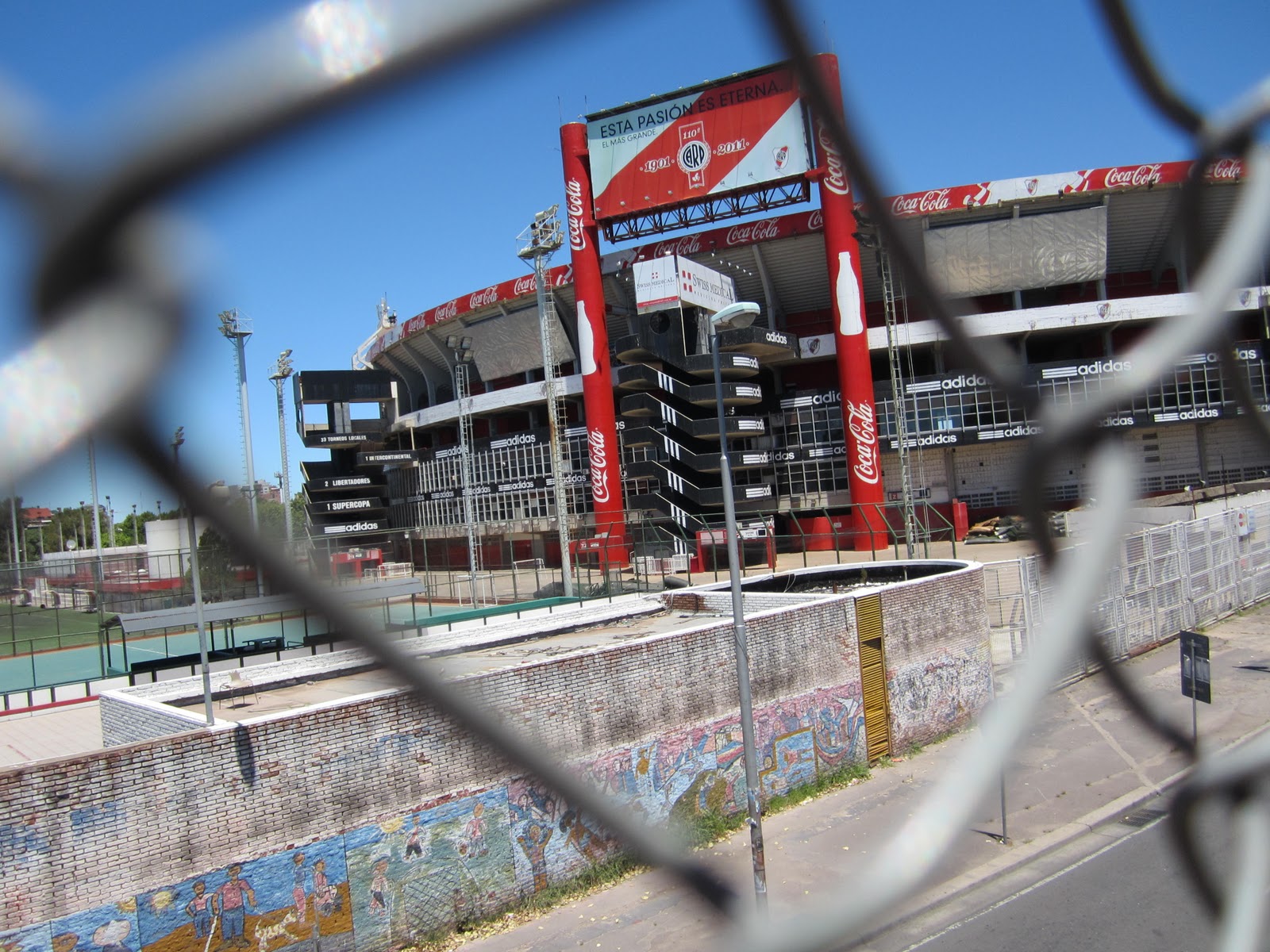
River Plate Stadium and Parque de la Memoria

Photo by Norito Hagino

By Katie Kamimoto


Today we had a field trip to ESMA, the soccer stadium, and the Memorial Park. ESMA, Escuela de Mecanica de la Armada, was a naval academy which also served as one of the main detention centers in the middle of Buenos Aires during the dictatorship in the 1970’s. Unfortunately we were not able to look at the museum today since they were on their summer schedule, so instead we walked to the River Plate football stadium where the 1978 FIFA World Cup was held. There has been a lot of controversy over the 1978 FIFA World Cup which has many disturbing memories associated with the World Cup for many Argentineans.

 In 1978, when the whole country was celebrating when Argentina won the Cup, less than 1km away there was ESMA, the detention center holding hundreds of people in captivity. As the city was celebrating the victory on the streets, imagining the psychological torture the detained must have been through while in their cells as the whole city celebrated, must have been immense.

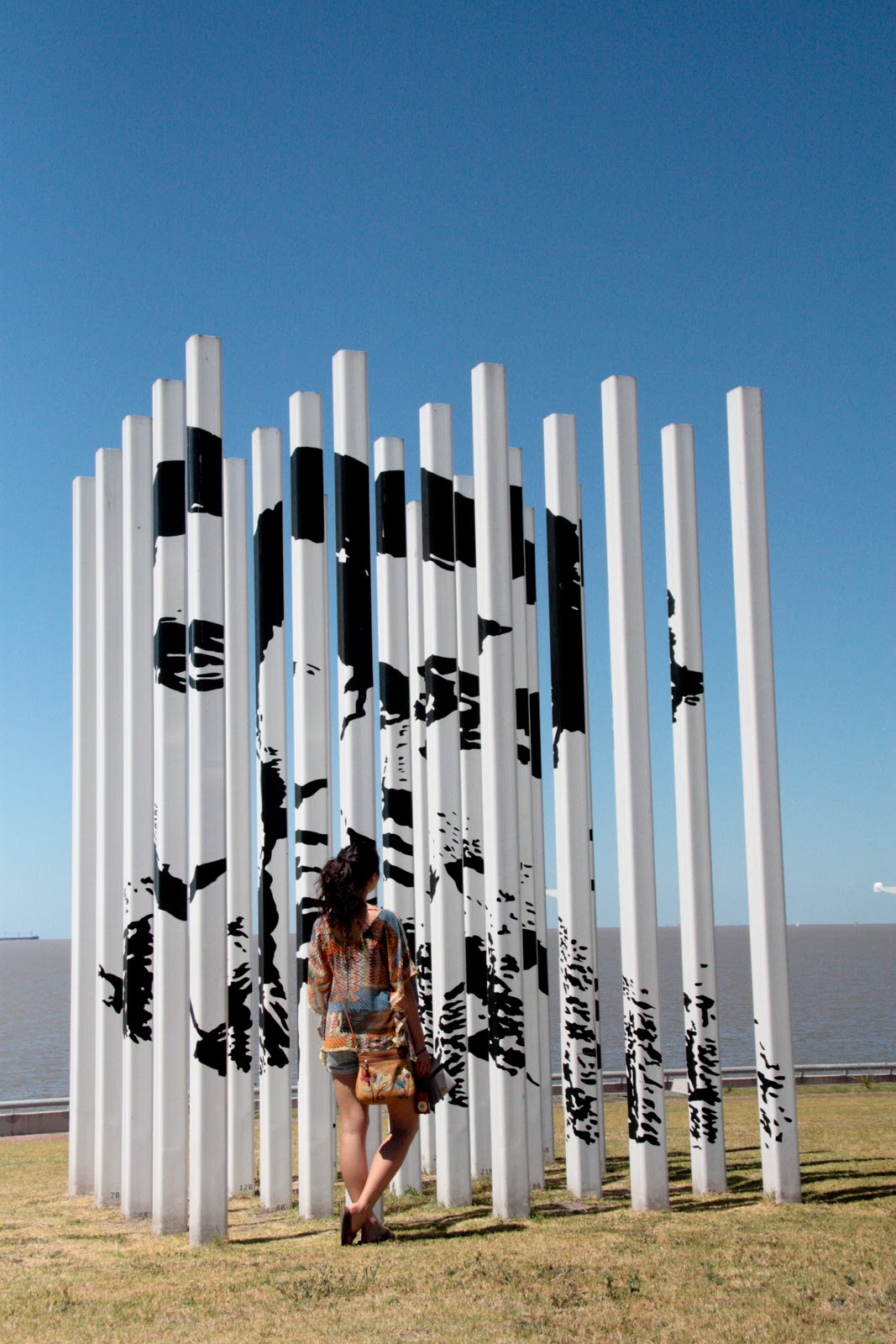
The Memorial Park was built in homage to the people detained, disappeared and assassinated, and aims to share the history of state terrorism by the arts. The Memorial Park is built next to the River Plate, which is symbolic of the many who were victims of the “flights of death”. The “flight of death” was a tactic the military used in order to destroy any evidence of bodies even existing by drugging the detainees to make then unconscious, loading them on a plane, and dumping them, hands and feet tied, into the river. The main monument had four walls with the names of the disappeared engraved in chronological and alphabetical order. It was installed in an open zigzag shape representing an open wound that still needs healing, a kind of healing can only be made possible by truth and justice. The different art installations share the history of the state terrorism, reminding everyone the horrors that happened during the dictatorship.


Walking from ESMA to River Stadium to the Memorial Park made me realize how short in distance everything was from one another. ESMA was just like any other building located in the center of the city, there is no way that the businesses and the people living in the apartments did not hear the screams and the cries of the tortured. The amount of fear that the state imposed on the citizens of Argentina allowed them to continue with the torturing and the disappearing of thousands of innocent people. Even though the horrors of state terrorism are now over, the disappeared have disappeared, and the only thing for Argentina to do now is to move on, but also to never forget.


Photo by Norito Hagino

Photo by Norito Hagino

Ese Infierno


 By Claudia Ahumada 


Ese infierno is based on the experiences of five women who survived “La Escuela de Suboficiales de Mecánica de la Armada” (ESMA) Munú Actis, Cristina Aldini, Liliana Gardella, Miriam Lewin, and Elisa Tokar. ESMA is a clandestine detention center located in Buenos Aires where those who opposed the dictatorship were interrogated, tortured, and eventually killed. ESMA is divided in several sections known as “capucha” “la pecera” and “el sótano” which was the last station before being trasladado (transferred). Everyone who was detained eventually learned that being transferred meant death. 

Miriam described her captivity this way: “tenía una luz sobre la cara, estaba sin ropa, tenia, los ojos vendados, las manos atadas y había no menos de diez personas gritándome. ‘Hija de puta!’, me decían tienes que colaborar’. En un momento uno de los tipos me levanto el antifaz y otro se bajo los pantalones. Yo estaba desnuda y atada. Me acerco el pene, mientras los demás me amenazaban: ‘Te vamos a pasar uno por uno, hija de puta’. La verdad es que yo hubiera preferido una violación, la hubiese sentido como algo más humano y comprensible que la tortura.”


Some of the torture methods described consisted of birthday celebrations, Independence day celebrations, “El día de los Reyes”, attending the World Cup, and by taking them to the outside world to dance and have fun for awhile, but then bringing them back to what they described as hell. It sometimes seemed as if the guards and torturers had human feelings because they would do "kind things", like passing messages along or holding the hand of a woman as she is being tortured so she wouldn’t feel alone. These women also spoke of their lack of trust in people and continued suffering long after the dictatorship had ended. Some had an extremely difficult time hearing a baby cry, going to the dentist, giving birth, or even going to sleep because of the nightmares that were to come. Officers at ESMA also took new born babies away from their mothers, to later put them into the arms of families with military ties or were loyal to the regime. There were, however, rare and special occasions in which the new born babies were actually given to the families of the abducted mothers. These mothers were kept in a special section of ESMA and they had a specific room for deliveries as well. After giving birth they usually had fifteen to twenty days with their babies before they were taken away. The fate of these mothers was death. They were injected with Sodium Pentothal, a powerful form of anesthesia, and thrown into the River Plate. Their personal testimonies are extremely significant because they are the crude unbelievable reality of what they experienced; without them, we would not be able to realize the magnitude of violence committed during the dictatorship. This also serves as evidence for trials that sadly continue to this day in the search for justice.

La vida Argentina


by Norito Hagino

My photo essay is just a portion of the many photos that I took during my 19 days in Buenos Aires. When I first came into Buenos Aires, I couldn’t help but notice the tremendous difference between this city and other Latin American cities I’d been to. Before coming to Buenos Aires, I travelled in the Dominican Republic, Venezuela, Ecuador, Peru, and Bolivia. Each Latin American country has a different face, and even within the same country, you can see outstanding differences in terms of development, language, and culture. Buenos Aires was the most developed city I had ever seen in South America; with huge buildings, wide roads, and paved streets, I was able to see the difference in one glance. However, the buildings and streets were so big that I could not fit all of them in my frame. The buildings in the city were amazing and I could not get my eyes of them. To me, it felt more like I was in Italy or Spain rather than being in a Latin American country. Of course, it is right for me to feel that way because there is a huge Spanish and Italian influence in the urban development of Argentina. Although I had a blast taking architectural photos while walking around in the city, I must say that the highlight of my photo journey was my encounter with Tango. I had a chance to see two shows, one in the Caminito (La Boca) and a street show on Florida Street. Both of them were amazing. The dancers were beautiful, their dresses were vibrant, and the dance was elegant and powerful at the same time. Their feet movements were so fast that I could barely follow them with my lens, and most of them did turn out blurry. I had a great time in Buenos Aires capturing the unique and vibrant culture in my frame, and now I am even more motivated to continue my photographic endeavors alongside my studies. 


Caminito


Sunset in Buenos Aires


Tango show in Caminito 


Las madres de Plaza de Mayo


My name is Victoria


El Parque de la Memoria


A lock at the Recoleta Cemetery


Kids playing on a swing at El Jaguel de Maria


Tango show at Florida Street


Tango orchestra performance at the San Telmo Sunday fair